
Headcount Planning: Every Hire Is a Load Your Cash Has to Carry
Headcount planning is load-bearing math. Each hire puts weight on your cash foundation, and the full cost of hire is the real load most founders never model.
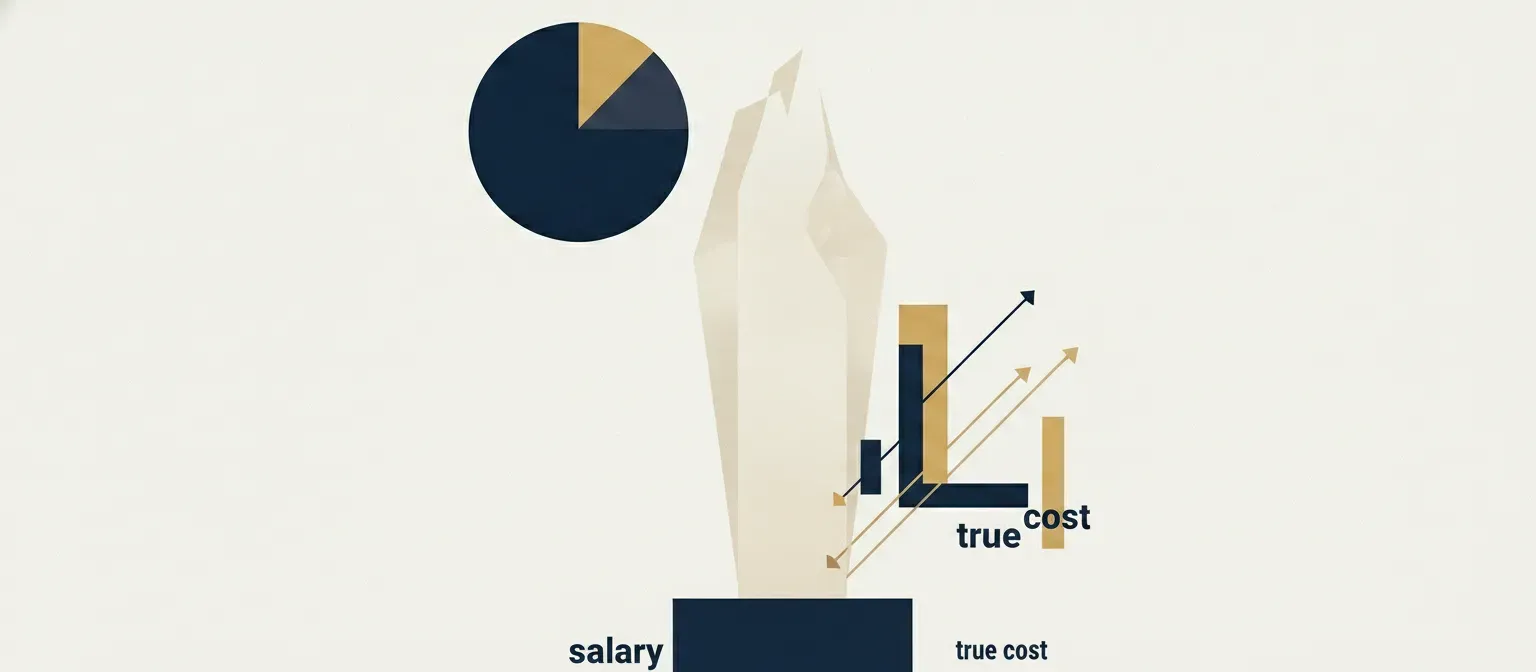
Headcount planning is the discipline of deciding which people you hire, when, and what each one costs you once you load every indirect expense on top, then checking that your cash reserves can carry that weight before you sign. A builder thinks about a structure the same way. Every person you add is a load placed on the foundation. The offer letter is not the question. The question is whether the ground underneath can carry the weight without settling.
Most founders model a hire at base salary and stop there.
That number is the lightest part of the load.
A hire is not a salary. It is a load your cash foundation has to carry.
What headcount planning really covers
Here is a plain definition before the analogy runs away. Headcount planning is the management discipline of forecasting how many people you need, in which roles, on what timeline, and what each role costs once you add everything the base salary leaves out. It sits inside your budget. It is the single line most likely to be wrong, and it moves your cash position faster than any other.
A builder sizing a footing does not design the base for the upright alone. You design it for the full weight that upright transfers to the ground: the dead load of the structure, the imposed load of everything it holds, and the wind on top of that. Size the footing for the upright alone and the building settles. The slab cracks two years on, and you learn the cheaper way that you modeled the wrong number.
A hire works the same way. The salary is the upright you can see, and the load is everything else that comes down through it into your cash.
The full cost of hire is the real load
When you sign a person, you sign for a pile of expenses that rest on top of the base. Cost accounting has a plain word for the total: the fully loaded, or carrying, cost. It is the base salary plus every indirect cost the hire brings with it.
Run the load path:
- Payroll taxes and deductions: the employer side of FICA, pension and insurance contributions, the costs that never reach the offer letter.
- Benefits: health insurance, retirement contributions, paid time off. This is cash that goes out every month whether the person ships work or not.
- Equity: options vesting over years cost you something real, just not in cash. Your cap table carries it even when your bank balance does not.
- Tools and space: software, equipment, the seat, the office, the rent allocated per head. These are indirect and easy to forget, and they do not stop.
- Recruiting: the agency fee, or the founder hours spent on the search instead of the product.
- Onboarding time: the new person is not at full output on day one. Months of ramping are months of full cost against near-zero work.
- Management overhead: every hire takes up a manager’s time. That is a labor cost too, just one carried by someone already on payroll.
Add it up and the carrying cost lands somewhere between 1.5x and 2.5x base for most early roles. Your $120K engineer is a $180K to $230K decision. That gap is too big to round away. It is a different budget.
Why a base-salary plan settles the whole structure
A startup rests on a finite stack of cash reserves, and the rate you spend them decides how many months you have left. Headcount is usually the largest controllable load in that spend. So when you size people at base salary, you are underestimating your biggest cost by a factor, and you are doing it on the line that drains cash fastest.
Run the math and it gets ugly fast. Plan ten hires at salary, miss the real load by even 1.6x, and you have committed to a year of spend you never put in the model. The structure does not lean the day you sign. It leans two quarters on, when the cash position drops faster than the forecast said and nobody can name the cause. Most startups die because they run out of cash, and a base-salary headcount plan is one of the common ways the ground gives way.
I watched a seed-stage team run exactly this. They modeled six engineers at $130K each and added fast. Nine months on, their reserves had carried a load closer to $1.3M against the $780K in the plan, and the round they thought sat a year out was a quarter out. It was the same six people on the same offers. They had just sized the footing for the upright instead of the load.
How to plan headcount so the foundation holds
Model every hire at full carrying cost, never base salary. Build the factor into the assumptions, not the footnotes.
A few rules that hold up:
- Use a separate factor per role. A senior engineer in a high-tax region carries a different load than a junior support hire. Estimate each one. Do not spread a single guess across the whole team.
- Forecast the cash, not just the pay. Set each hire’s carrying cost against your reserves month by month. The real question is not whether you can afford the salary, but what this load does to the months you have left.
- Track the variance. Your plan is a forecast, and forecasts drift. Compare planned headcount spend against actual every month and close the gap before it compounds.
- Treat hiring as a controllable cost, because it is one. Of every line in your budget, this is the one you most directly choose, so choose it on the real load.
That last rule needs one more turn. You do not control whether a person carries benefits and taxes and ramp time. What you control is whether your model accounts for them, which is most of the job.
This is where CX Cash does its work. A number means little until you see it against your budget and the months you have left. CX Cash models the full carrying cost of each hire, runs it against your reserves, and shows you the variance as it forms, so headcount planning stops being a salary spreadsheet and becomes a forecast of the load your foundation can carry. You should know where the money is going, and with headcount, that is where most of it goes.
Fully loaded cost = base salary x carrying factor (1.5 to 2.5)
Frequently asked questions
What is the full carrying cost of a hire?
It is the base salary plus every indirect cost that comes with the person: payroll taxes, benefits, equity, tools, space, recruiting, onboarding time, and management overhead. For most early-stage roles the total lands between 1.5x and 2.5x the base salary.
How is headcount planning different from budgeting salaries?
A salary budget records one number per person, the upright you can see. Headcount planning forecasts the carrying cost of each role over time and sets it against your cash reserves, so you can see what the weight does to your months of cash before you make the offer.
What carrying factor should I use for cost of hire?
Estimate it per role rather than using one figure for the whole team. Tax region, benefits, equity, and ramp time all move the number. A common range is 1.5x for lean roles to 2.5x for senior hires with heavy benefits and long onboarding.
When does fast hiring start to threaten the structure?
The moment your carrying headcount spend runs past what you modeled. Because hiring is the largest controllable cost and the quickest way to drain cash, a fast plan built on base-salary math can spend a year of cash before the variance shows in the position.
The stand
A headcount plan built on base salaries is closer to a wish about the weight than a plan. The salary is the cheapest and most visible part of every hire, and it is also the least telling. Founders who size their foundation for the upright instead of the load are building toward the one kind of settlement they could have caught in the model.
So model the real load. Build the factor in, forecast it against your cash, and read the variance the way a builder reads a structural gauge. Then bring your investors the carrying plan instead of the salary line, and let them see you know exactly what each person costs your foundation to carry.
Join CX Cash and put your fully loaded headcount numbers in front of the people who back you. Then share this with the founder you know who is still sizing hires at salary. They will thank you in about two quarters, right about when the ground would have given way.
More in Budgeting, Spend & Working Capital

Budget Variance Analysis: Stop Sailing on Dead Reckoning
Budget variance analysis is the fix that tells you where your cash really is, not where the plan assumed it would be. Here is how to read the drift and steer back.

What Is Account Reconciliation? The Instrument Cross-Check For Your Cash
What is account reconciliation? It's the instrument cross-check pilots run on every reading, applied to your money, so a single wrong number can never fly your company into a wall.

Expense Management for Startups: Prune the Spend So the Business Can Grow
Expense management for startups is not bookkeeping. It is pruning, the selective removal of dead spend so light and cash reach the parts of the company that actually bear fruit.