
Cash Flow Forecasting Techniques: Send the Right Scout Down the Road Ahead
The cash flow forecasting techniques you actually need read the ground ahead like scouts. Pick the one that fits the distance and the time you have, and your forecast stops lying to you.
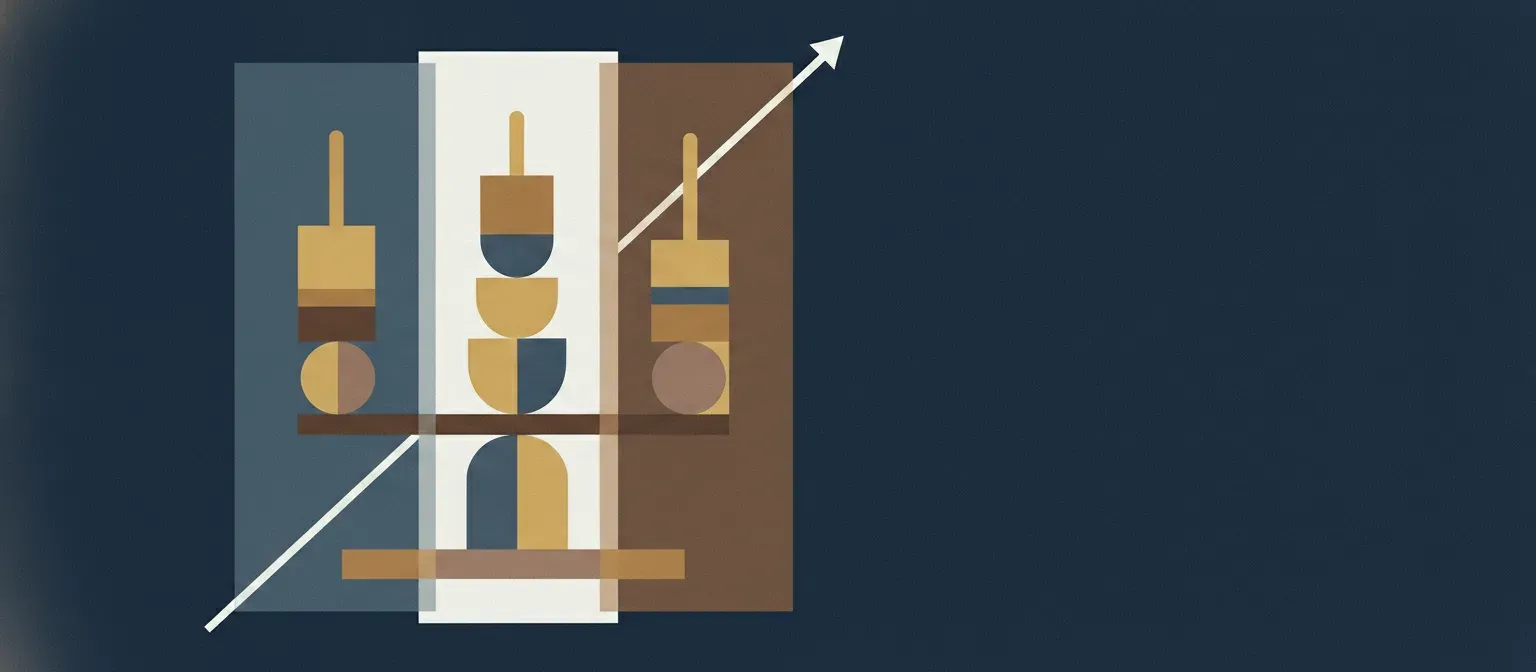
Cash flow forecasting techniques are the methods you use to read the ground ahead, so you can see a cash shortfall coming before it arrives and your company runs out of money. Think of each technique as a scout you send down the road. One shows you cash in the next month. Another shows you the year’s cash pattern. Each scout works for a different time horizon. The whole skill is knowing which one to send.
Most founders choose a method the way a green commander chooses a plan: once, early, and then never again. They learn one technique at seed and march it into a Series A, where it stops working. So let me walk you through the three methods that matter, what each one is good for, and the stand I will take at the end about which one you actually need first.
The near method: the direct method
The direct method is the report from close. It tells you one narrow thing: what cash actually moves in and out over the next 30 to 90 days. You schedule the company’s receipts, mostly the collection of accounts receivable from recent sales, against its disbursements: payroll, the payment of accounts payable, interest on debt. Cash in, cash out, day by day or week by week.
This method is for survival.
It reports back with hard numbers because it works inside the ground you already know. You have actual data for the next 30 days, not projected estimates, so the closer you read, the better the report. Past about a month the picture turns blurred, which is the honest limit of the direct method and the reason the other methods exist.
Our free 13-week cash flow model is built on this method. Thirteen weeks is the founder’s near distance: long enough to react, close enough to rely on.
The far method: the indirect, driver-based method
The far method reports the shape of the ground you cannot see yet. Instead of scheduling every invoice, you build the forecast from what drives your cash: new customers, revenue per customer, the timing of when those customers pay, the costs that grow alongside them. This is the indirect family of methods, the driver-based ones, built on projected income statements and balance sheets.
The adjusted net income method starts with operating income and adds or subtracts the changes in receivables, payables and inventories. The pro-forma balance sheet method projects the book cash account directly. Both suit the medium term, up to a year, and the long term of several years. They trade the near method’s precision for distance. You give up the exact week a bill arrives to see the shape of the next four quarters.
A founder reads the far method to answer the question that keeps you up at night. How long does the money last, and what changes that? Reach for this method when the near one stops being enough, usually somewhere around a Series A, when the spreadsheet that worked at seed starts to creak under its own weight.
The method you send into bad weather: scenario and sensitivity
The third technique is not one report down one road. It is a patrol sent into weather you fear. Risk and uncertainty sit at the center of all forecasting, and an honest forecast reports the degree of uncertainty attached to it. You take the driver-based model and ask what if. What if collections slow? What if the round slips a quarter? What if your best customer departs?
The answer is not a single forecast. It is a range of outcomes. Sensitivity analysis changes one input and watches the cash move. Scenario modeling changes several together to draw a good case, a base case, and a bad one. This is the technique that splits a startup that survives a hard quarter from one that does not, because the hard quarter is already on the table before it arrives.
But the risk here is confidence. The most detailed scenario model in the world will march your company off the edge if the assumptions feeding it are wishful thinking. Sophistication is not accuracy. Question the inputs first, then widen the view.
Sophistication is not accuracy.
Which method to send, and when
Founders often pick one technique and march it into every stage. Some never spot a funding gap a year out. Others build detailed models while their payroll shrinks. The skill is knowing when to switch scouts. Use the near method for this week, the far method for the year, and the patrol for the risks you worry about.
Actually, let me be more exact. Do not try to run all three at once. Switch them the moment the question changes. Most founders fail because they do not know when to make that switch.
Last spring a founder I know ran a 13-week model and a separate driver-based forecast and a scenario sheet, all by hand, across three spreadsheets. A customer paid two weeks late. She updated the near model but left the other two alone, and walked into a board meeting with three forecasts that did not match. The problem was not the method itself. It was keeping all three in sync.
CX Cash exists to run all three off one connected source of truth, so the data remains accurate and changing methods takes a click instead of a weekend. You should know where the money is going. The right method, sent at the right moment, is how you find out.
Frequently asked questions
What is the most accurate cash flow forecasting technique?
For the short term, the direct method, the near method, is the most accurate, because it reports actual receipts and disbursements rather than estimates. Accuracy falls as the distance grows, which is why driver-based and scenario techniques exist. Past about 30 days you trade precision for distance. And no method is accurate if the assumptions feeding it are wrong, so question the inputs before you rely on the report.
Which technique should an early-stage startup use?
Send the near method first. A simple 13-week model built on receipts and disbursements tells you the only thing that matters at seed: can the business afford payroll and suppliers this month. Add the far method, the driver-based one, as you scale toward a Series A, when how long the money lasts becomes the central question. Reach for scenario techniques once a single bad quarter could threaten the company.
How often should I update my cash flow forecast?
It depends on the technique and the strain. The near method reports weekly, or daily when insolvency is close. Driver-based and scenario forecasts can run monthly or every quarter, since they read the year’s shape rather than the week’s. The frequency is set by the business, the industry, and how close to the edge you are.
Do I still need a spreadsheet, or can software do this?
A spreadsheet is the classic tool, and our free template is one. It works until you exceed it, usually when keeping three methods in step by hand becomes a second job. Connected software keeps the data current across every technique so changing is fast, not a weekend of copy and paste.
The stand
Chasing more and more forecasting techniques is just procrastination dressed up as planning. You do not need a dozen methods. You need three and the discipline to send the right one as your stage demands. The founders who survive are not the ones collecting the biggest model. They are the ones who change the road they are reading the moment the question changes.
That practice is learnable, and it pays off the first time a customer pays late. Enter CX Cash, grab the free 13-week model and forecast template, and start running every technique off one source of truth. Then share this with the founder down the hall who is still reading one road.
More in Cash Flow Forecasting & Projections
Accounts Receivable Forecast: Why One Number Is a Forecast That Always Misses
An accounts receivable forecast is not one number. Learn to run it like a weather model, updating AR and AP timing with real data so the cash gap never blindsides you.

The Cash Conversion Cycle Explained: Read It Like a Race Split
The cash conversion cycle is the clock on every dollar, from the start line where you pay suppliers to the finish where customers pay you. Here is how to read your splits and run a negative one.

Direct vs Indirect Cash Flow Forecasting: The Ticket Rail and the Books
Direct vs indirect cash flow forecasting, run like a kitchen: the direct method is the ticket rail during the rush, the indirect method is the books you square after close.